Blog · Room planning
How to make a room look expensive on a budget
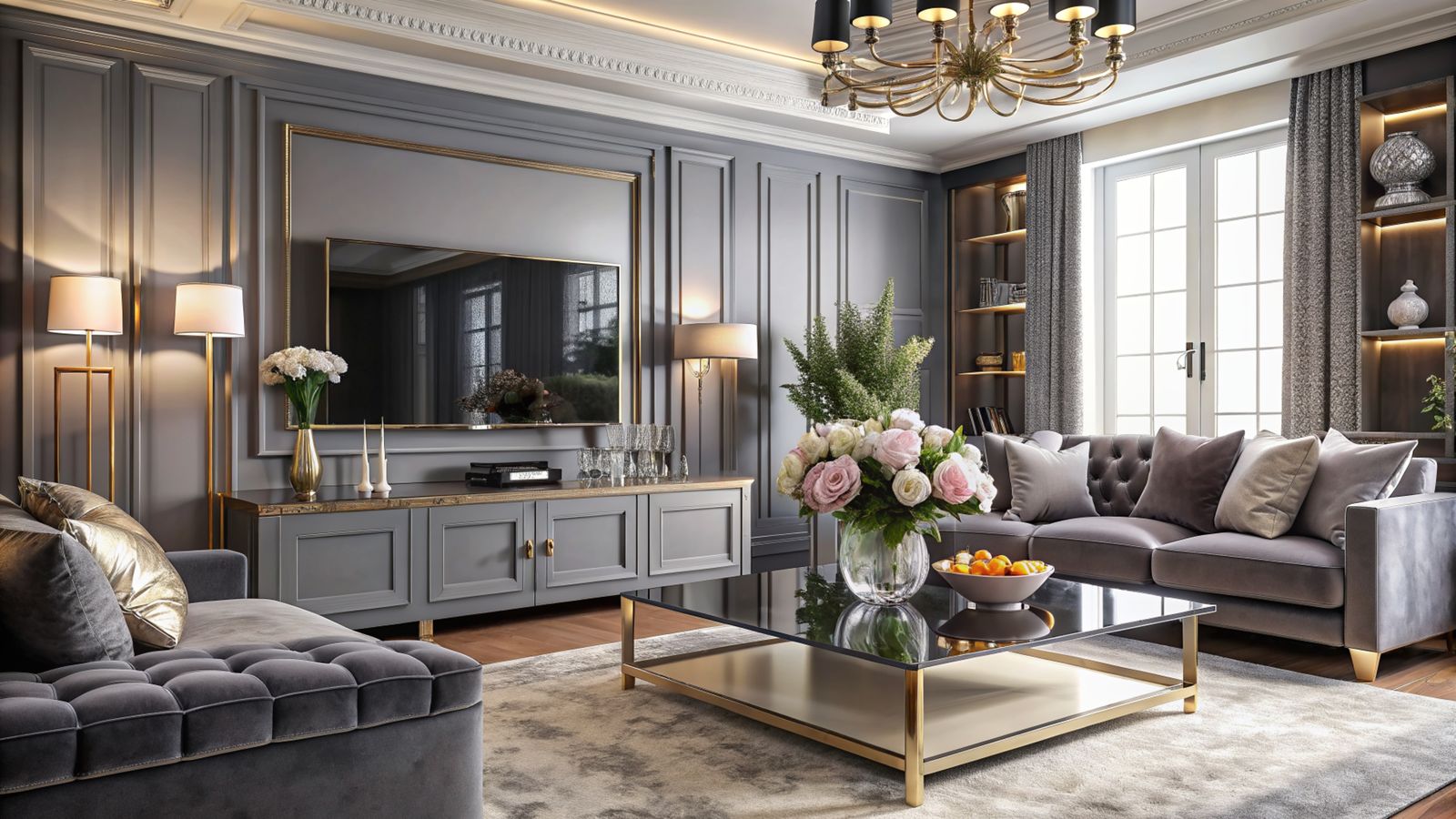
The rooms that look expensive in photographs usually owe more of their effect to decisions about scale and light than to the price of their furniture, and most of those decisions cost very little to get right. The living room at the top of this page is a useful example, since its paneled gray walls, brass chandelier and large gold-framed mirror carry most of the sense of luxury while the sofas and tables are familiar shapes.
Hang curtains high and wide
Curtains are the least expensive way to make windows look larger, provided the rod is mounted close to the ceiling and extends 8 to 12 inches past the window frame on each side. When the panels are open they then rest on the wall beside the window, so the full width of the glass stays visible and the window reads as larger than it is.
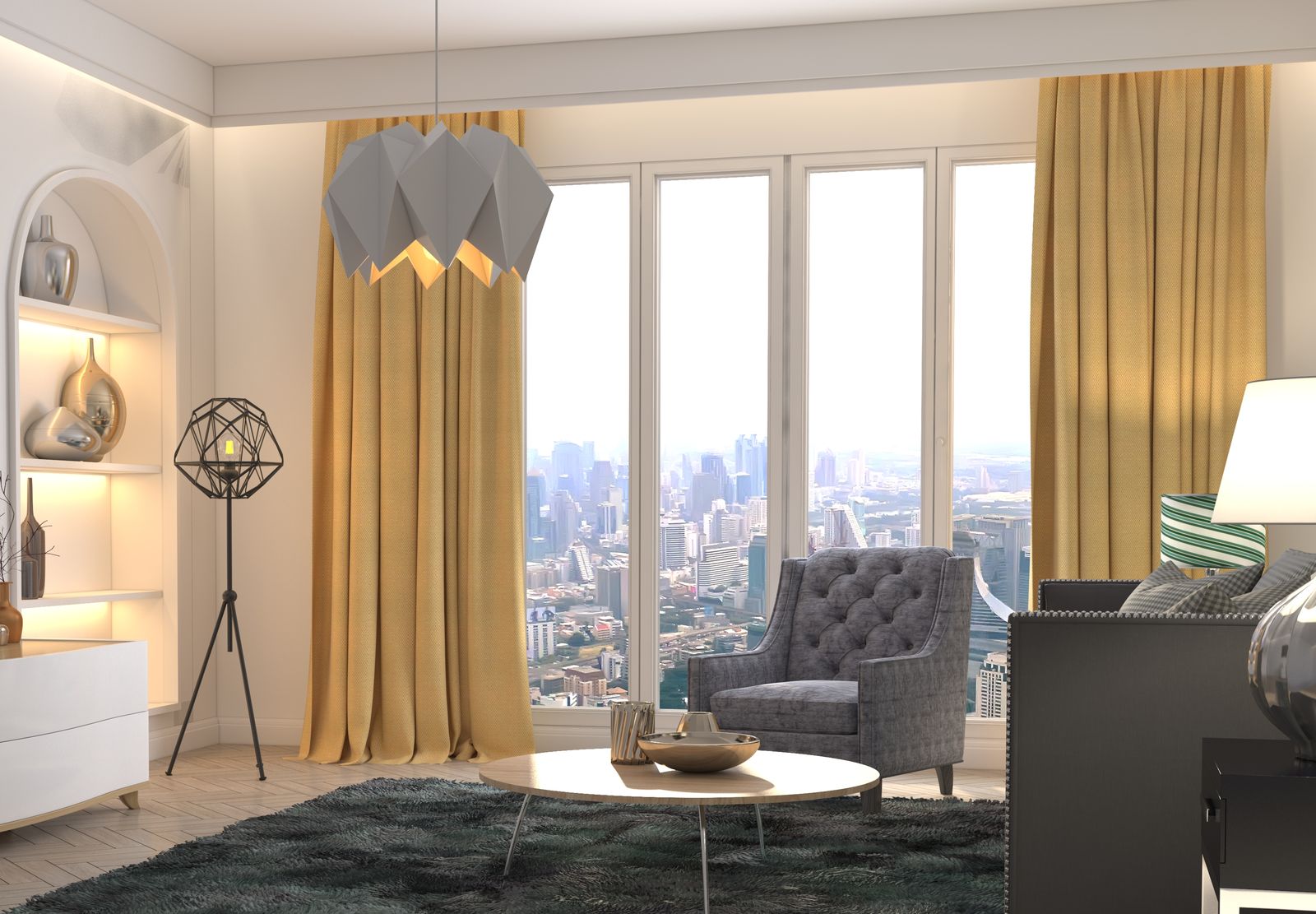
In the room below, the mustard panels hang from just beneath the ceiling and fall straight to the floor on both sides of the wall of windows, which draws the eye upward and makes the ceiling seem higher. Ready-made panels in 96-inch and 108-inch lengths fit most ceilings, and a linen or linen-blend panel that just touches the floor looks tailored at a fraction of the cost of custom drapery.
Buy the largest rug the room allows
A rug that is too small is the most common reason a living room looks unfinished, because the furniture appears to float around a small island in the middle of the floor. In most living rooms an 8-by-10-foot rug is the minimum, and the rug should be large enough that at least the front legs of the sofa and every chair rest on it, with 12 to 18 inches of floor showing around the edges.
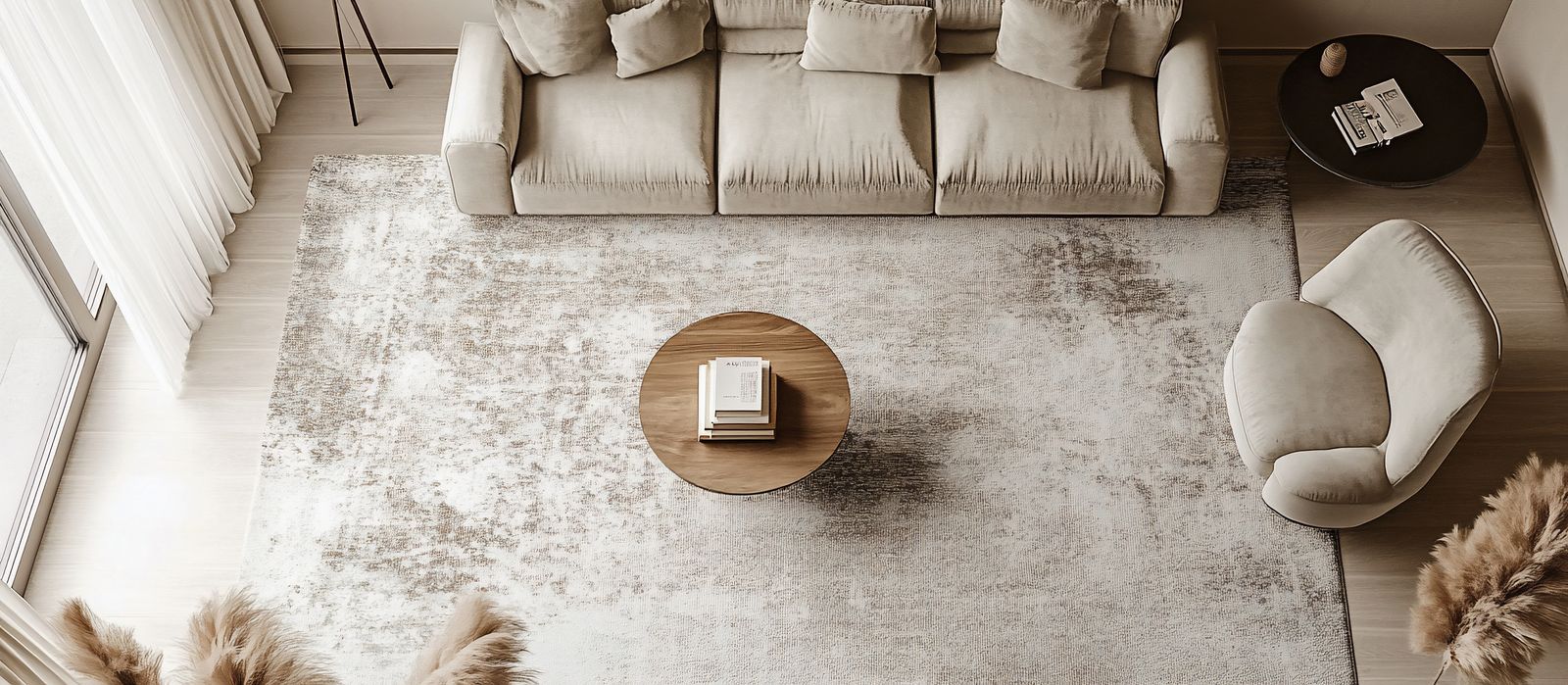
The overhead view below shows the proportion clearly, since the rug runs beneath the front of the sofa and the lounge chair, the round wood coffee table sits near its center and a band of pale oak floor shows beyond it. A low-pile rug with a soft, mottled pattern like this one also hides everyday wear well, which makes it a sensible choice for a family room at a lower price.
Layer light at different heights
A room lit only by an overhead fixture looks flat in the evening, and the rooms that look most expensive at night combine a ceiling light with lamps placed lower in the room, near the places where people sit and read. Each seating area needs at least one lamp of its own, and the light from those lamps should fall on the people using the room more than on the ceiling.
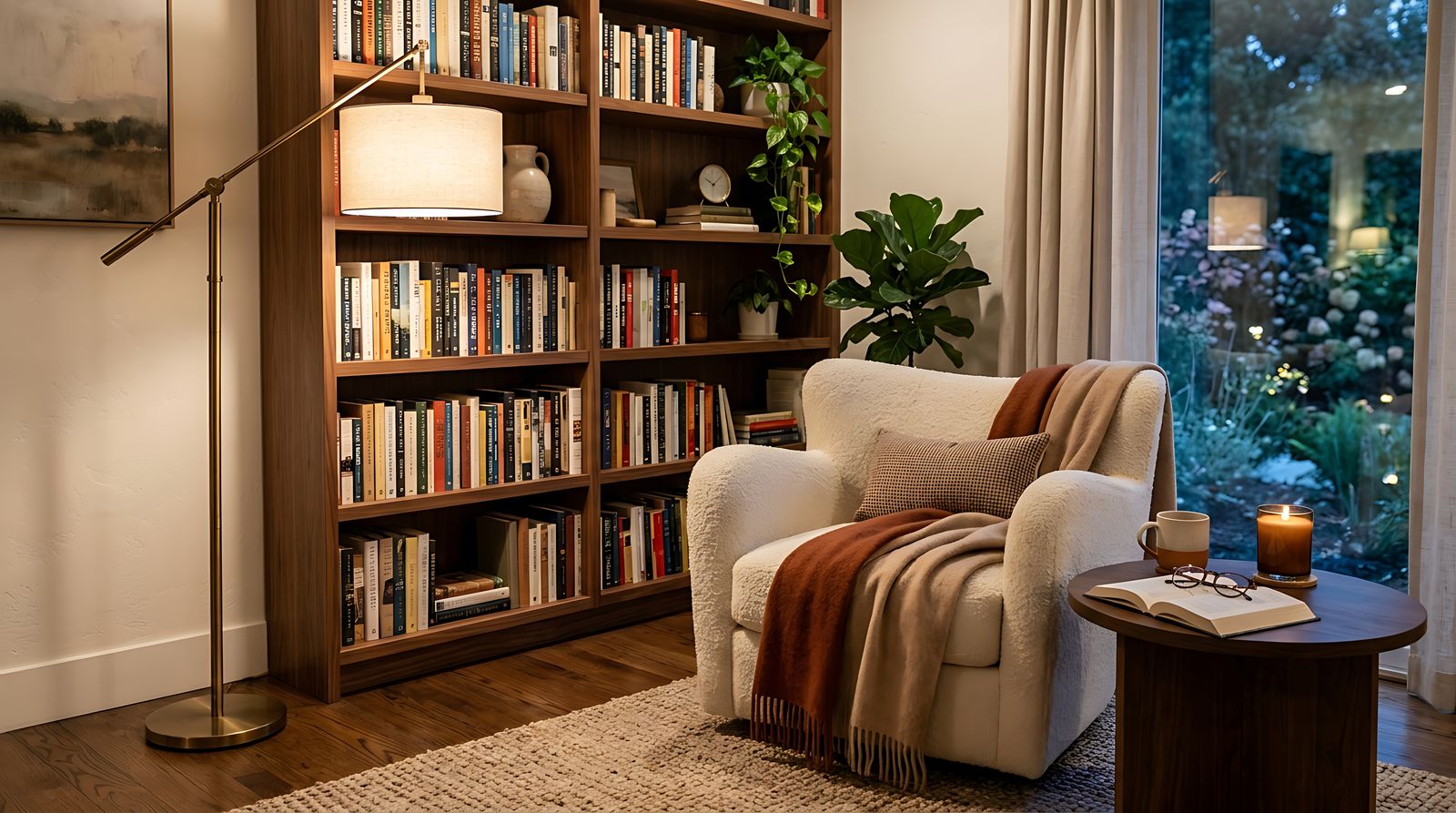
In the reading corner below, an arched floor lamp throws a pool of warm light over the cream armchair while a candle glows on the round side table beside it, so the corner looks considered and comfortable after dark. Use bulbs of the same color temperature in every lamp, ideally 2700 kelvins for a warm white, and add a dimmer to the overhead fixture so its brightness can be lowered once the lamps are on.
Add molding and paint it to match the walls
Wall molding is the detail that most often separates a builder-grade room from one that looks custom, and simple picture-frame molding usually costs a few hundred dollars per wall in materials. It can be cut with a miter saw and fixed with construction adhesive and finishing nails in a weekend. The living room at the top of this page shows the approach, since its paneled walls and the cabinet doors below the mirror are painted the same soft gray, which makes the detail look original to the house.
Painting walls and trim in one color is effective in a room that already has molding, provided the trim is painted in a satin finish and the walls in eggshell, so the slight difference in sheen shows the profile of each frame. The single color also keeps a small room calm, because the eye moves across the walls without stopping at every edge.
Hang one large piece of art or a mirror
Several small frames scattered across a wall tend to look busy, while a single large piece looks intentional, so choose art or a mirror that spans about two-thirds of the width of the furniture beneath it. In the room at the top of this page, the large gold-framed mirror above the gray console reflects the windows across the room, which brings more light into the space and gives the wall one strong focal point.
Large prints, framed textiles and oversized mirrors cost far less than original art of the same size, and they look most considered when the center of the piece sits about 57 to 60 inches from the floor. When the piece hangs above a sofa or console, leave 6 to 10 inches between the furniture and the bottom of the frame so the two read as one composition.
Repeat one metal finish around the room
A single metal finish repeated in several places is a quiet sign of planning, and four or five appearances of the same tone are usually enough for the eye to read the choice as deliberate. The gray room at the top of this page repeats brass in the chandelier, the floor lamps, the frame of the glass coffee table and the feet of the sofa, so the finish ties together pieces that could easily have come from different stores.
Changing cabinet pulls, lamp bases and picture frames to one finish is among the least expensive changes in this guide, and it pairs well with a careful edit of accessories. A few larger objects on each surface look more considered than many small ones, and the objects you remove can be rotated back in when the season changes.
Spend on what you touch and save on the rest
The pieces that most affect how expensive a room feels are the ones people sit on and walk across, so the sofa and the rug deserve the largest share of the budget. Side tables, lamps, frames, pillows and baskets are where good inexpensive options are easiest to find, and stores such as IKEA, Target and World Market carry versions of these pieces that look at home beside a better sofa. Our guide to the Restoration Hardware look for less compares one sofa at three price points, which shows how much of a high-end look survives a smaller budget when the money goes to the right pieces.