Blog · Style
How to find your decor style from your Pinterest saves
Most Pinterest boards already contain a clear decor style, and the difficulty lies in seeing it among dozens of rooms that look different at first glance. The method below takes about 20 minutes, and it works with any board, whether it holds 30 pins or 300.
Gather your saves in one place
Start with the board you use for the room you plan to change, or combine several boards if your saves are spread out, and scroll through them quickly so that your attention stays on the patterns across the whole board. Then choose the four or five pins you would most like to live in, without worrying yet about whether they match, since these favorites will carry the most weight when you name the style.
Look for what repeats
Read your favorites for the same four clues every time: the colors that cover the largest surfaces, the tone of the wood, whether the main shapes are curved or straight, and how much decoration sits on the tables and shelves. A board in which most rooms share cream walls, light oak and rounded furniture describes a different style from one full of dark wood, brass and paneling, even when both have been saved under the same word.
Write the repeats down as plain descriptions, such as "walnut, cream, low and curved," since a list of what you actually saved is more reliable than any label you might borrow. Those notes become the test for every style description that follows.
Six styles that appear on many boards
The six styles below are among the most common in living rooms and dining rooms, and each one is shown in a photograph so that you can compare it directly with your own favorites. Read the description of each room for the four clues above, because the clues will match your saves more reliably than the general impression of a photograph.
Warm minimalist
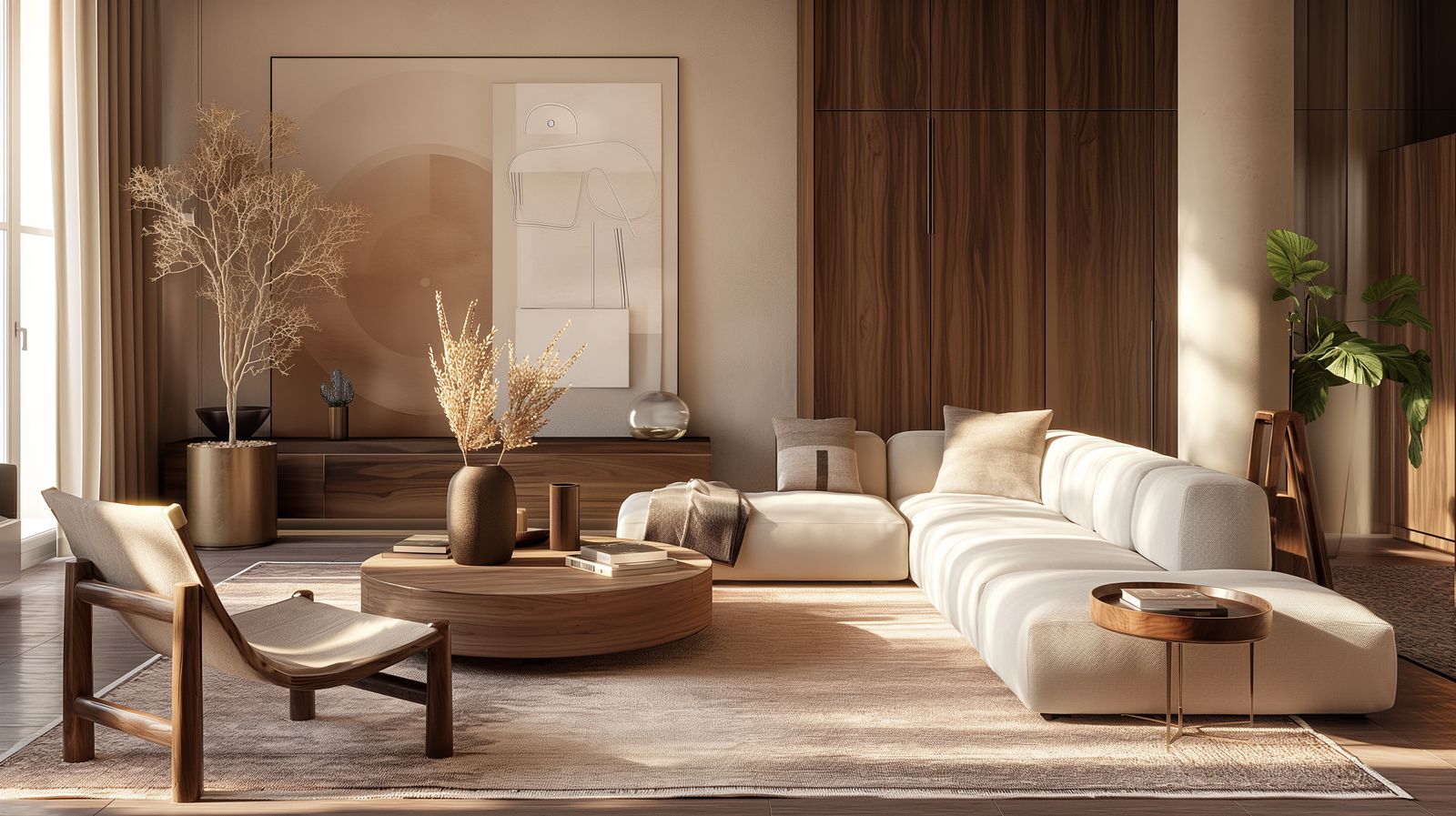
Warm minimalism keeps the restraint of modern design and adds warmth through wood and soft neutrals, as the room at the top of this page shows. A low cream modular sofa sits against walnut paneling there, beside a round wood coffee table and a sling lounge chair with a walnut frame. Surfaces carry only a few objects, such as a single ceramic vase or a branch of dried grasses, and the palette stays within cream, tan and brown.
Organic modern
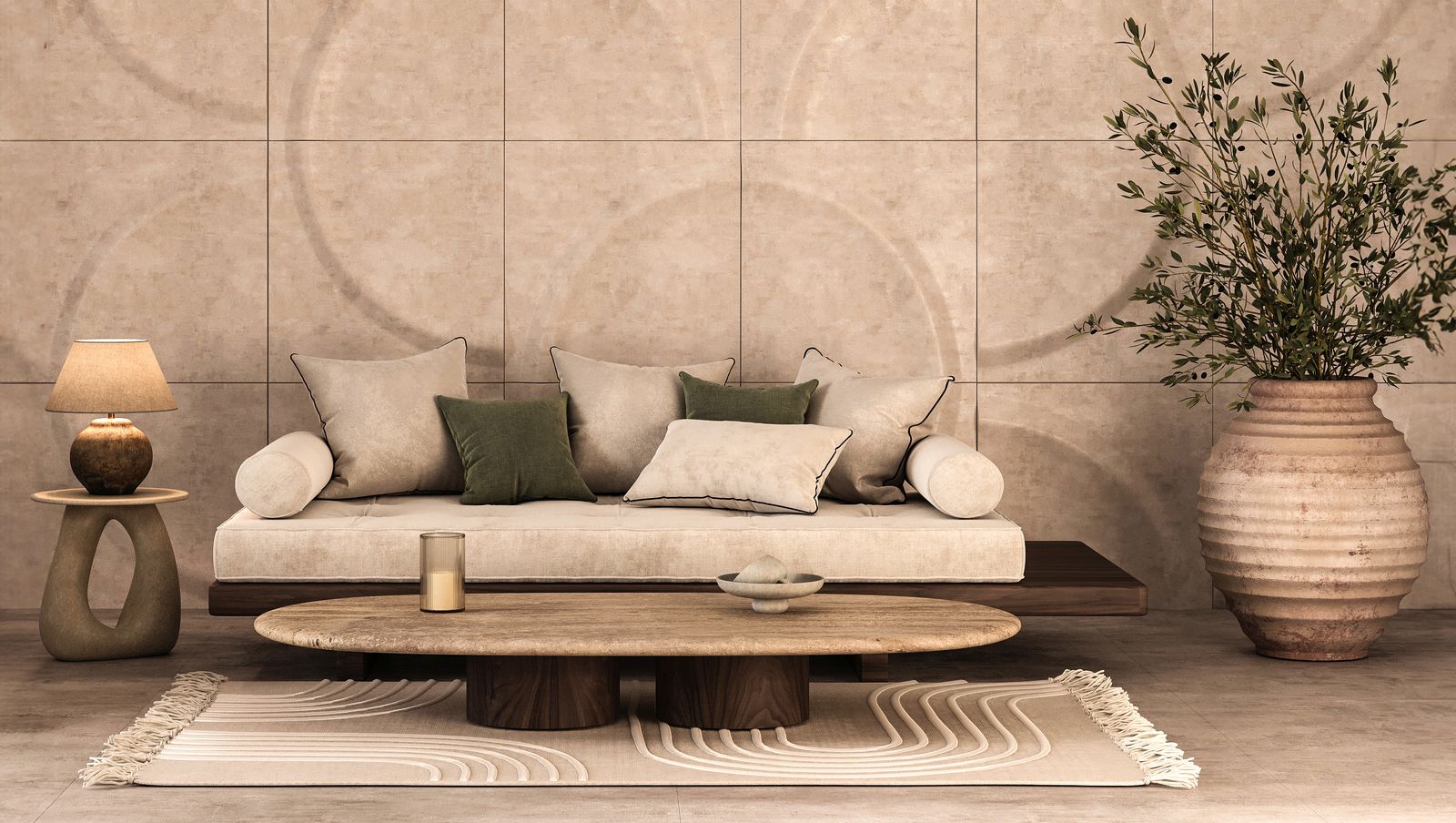
Organic modern rooms favor natural, imperfect materials and soft curves, and the room below shows the style clearly with its low daybed of cream cushions and olive pillows, its oval stone-topped coffee table and a large ribbed terracotta urn filled with olive branches. The wall behind the daybed carries a pale stone texture with curved patterns, which repeats the rounded shapes of the furniture and the sculpted side table.
Modern traditional
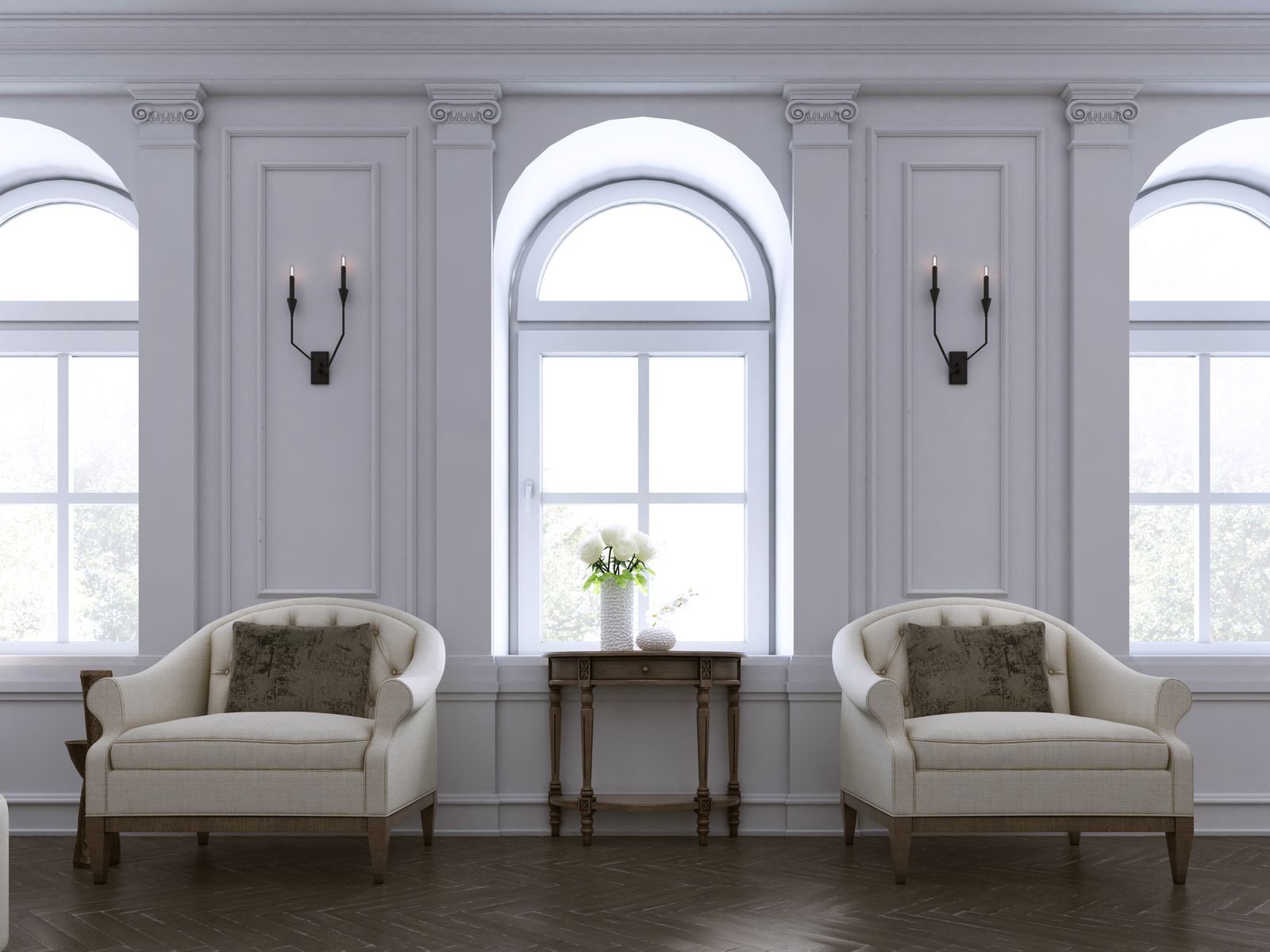
Modern traditional rooms keep classical architecture, such as paneling, columns and arched windows, and furnish it with simpler pieces in a restrained palette. In the room below, a pair of cream tub chairs with olive velvet pillows sits on either side of a carved wood console beneath an arched window, while slim iron candle sconces and dark herringbone floors keep the formal setting quiet and uncluttered.
Modern coastal
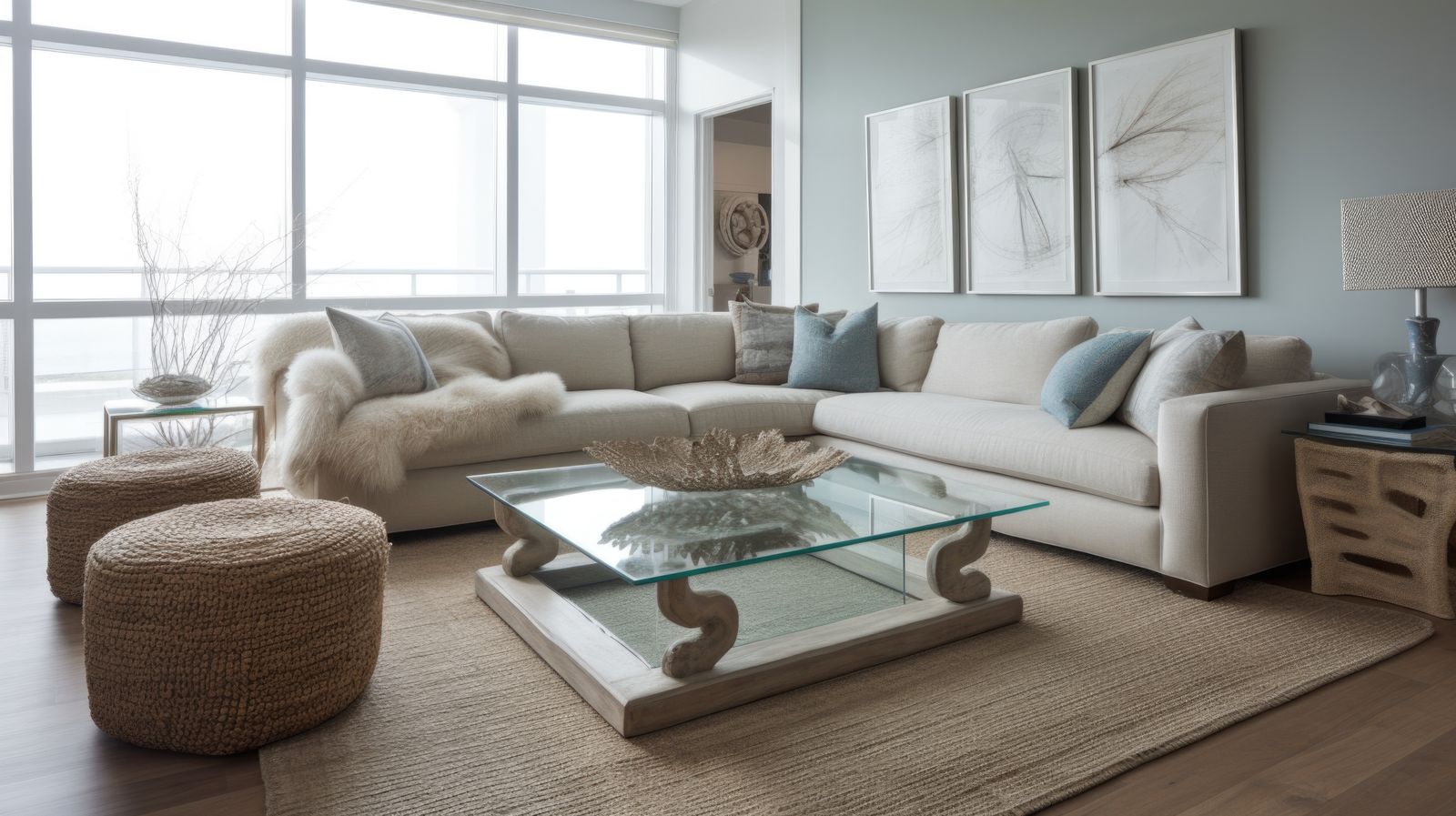
Modern coastal rooms are light and relaxed, with white and sandy neutrals, soft blue accents and natural fibers that suggest the beach without relying on anchors or seashell prints. The room below combines a cream sectional with pale blue pillows, two woven poufs, a glass coffee table on a curved white base and a jute rug, with a wall of windows on one side and soft blue-gray walls on the other.
Mid-century modern
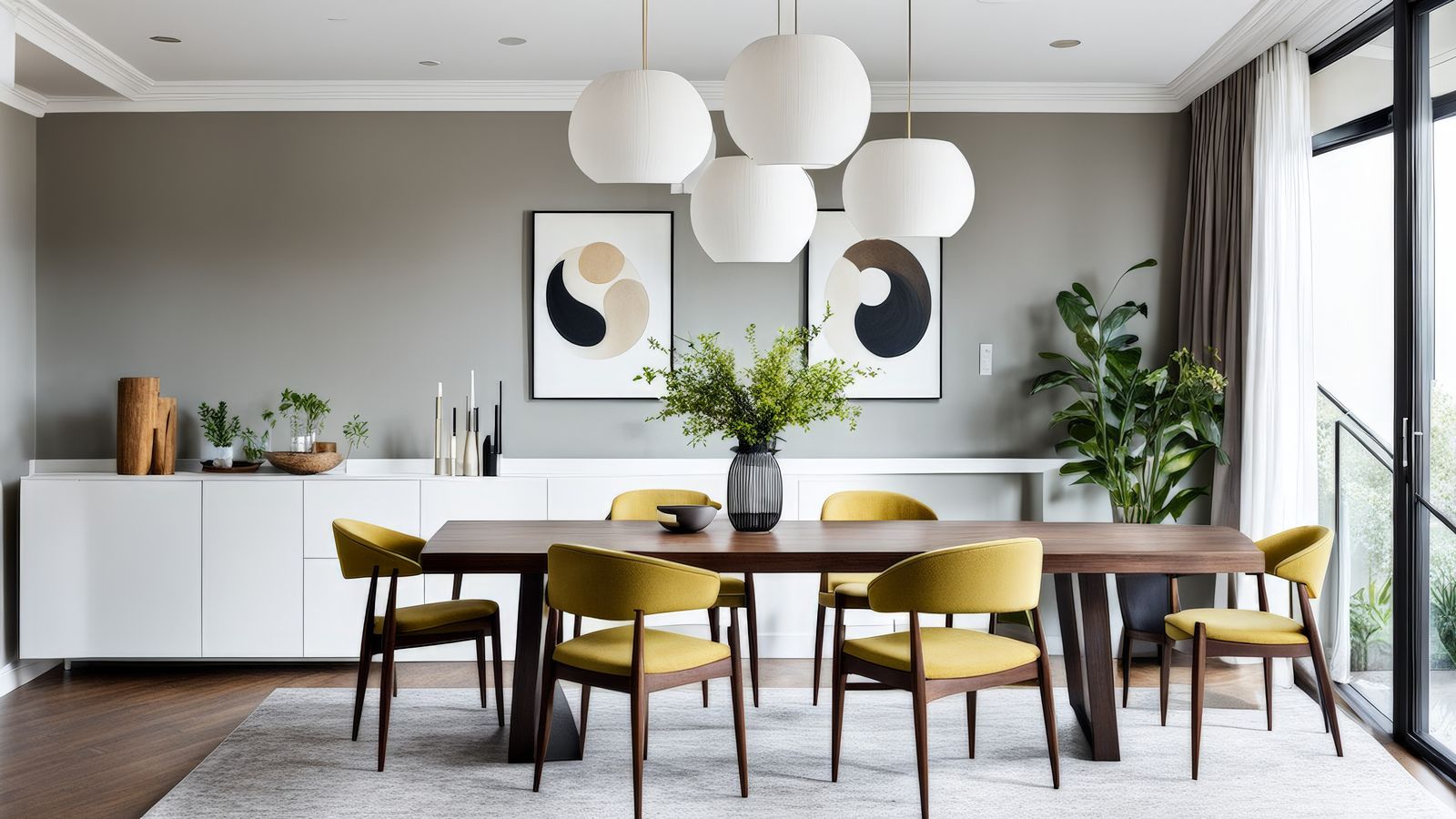
Mid-century modern draws on furniture designed in the 1950s and 1960s, with tapered legs, warm walnut and a few saturated colors set against plain walls. The dining room below has the classic combination, pairing a walnut table with upholstered mustard chairs on slim wooden legs, a cluster of white globe pendants and two framed prints with bold circular shapes above a long white credenza.
Moody modern
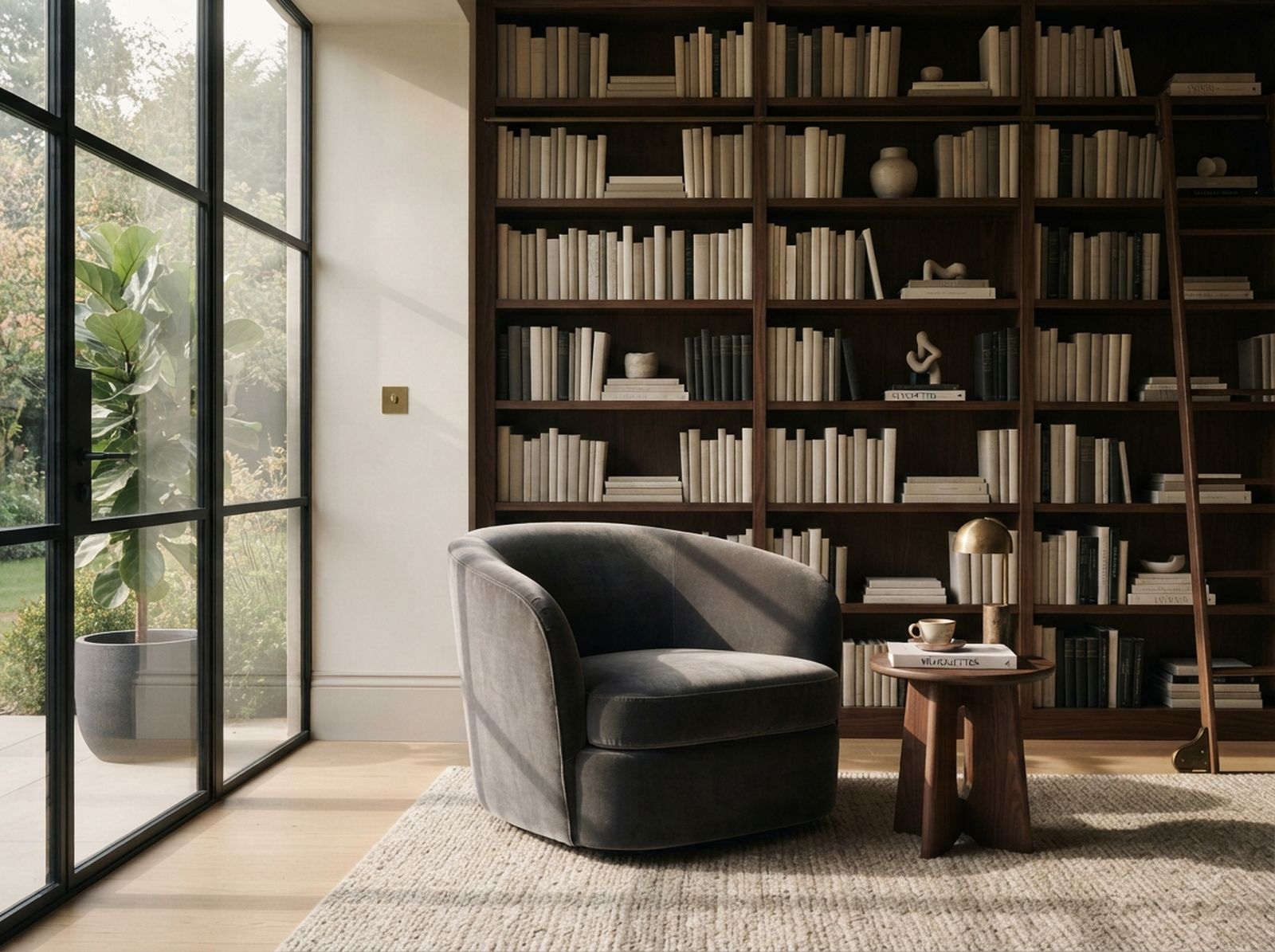
Moody modern rooms use dark wood, deep colors and strong contrast to give a space a quiet, enclosed feeling, which suits libraries, dens and bedrooms especially well. In the library below, floor-to-ceiling bookshelves in dark-stained wood with a rolling ladder, a charcoal velvet swivel chair and black steel-framed glass doors stand against cream walls and a pale wool rug, so each dark piece reads as a deliberate choice.
Name your style in a few words
Many boards combine two styles, so the most accurate name usually pairs a main style with a modifier, such as "warm minimalist with organic shapes" or "modern traditional with moody colors" for a board that mixes paneling with dark paint. Test the name against your favorite pins, and if one of them does not fit, adjust the words until it does, since the name only helps if it describes the rooms you actually saved.
Use the name to edit your board and your shopping
Once the style has a name, remove the pins that contradict it, which leaves a board that works as a brief for the room, and check each piece you consider buying against the same words before you order it. A sofa or rug that fails the test will pull the room toward a different style from the one your board describes, however attractive it looks in the store.
If your board leans toward warm grays, linen and reclaimed wood, our guide to the Restoration Hardware look for less shows how to furnish that style at lower prices. For any style, the guide to making a room look expensive on a budget covers the curtain, rug and lighting decisions that make the finished room look complete.